

Post-Autumn Budget 2026: How UK Businesses Are Navigating Growth, Margins and Capital

Following the 2026 Autumn Budget, UK business leaders and their advisors are taking a calm, measured approach to the year ahead. Rather than pulling back as employment costs rise, growing SMEs and mid-sized companies are finding steady, practical ways to protect their margins while keeping long-term ambitions moving forward.
Across the market, leadership teams are making their capital work harder, investing in technology to support their people, reviewing existing debt, and exploring flexible, non-dilutive funding when the right opportunity comes along.
Key Findings at a Glance
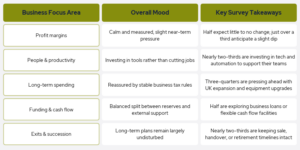
1. Profit Margin Outlook Over the Next 12 Months
Even with ongoing cost pressures, the prevailing mood among UK leadership teams is grounded and resilient. Half of surveyed businesses expect the Autumn Budget updates, including higher minimum wages and employment tax thresholds, to have a broadly neutral effect on their bottom line over the next 12 months. Others note that targeted reliefs and policy stability provide welcome breathing room to keep investing.
Where margins are feeling tighter, the expected impact remains manageable. Just over a third of leaders anticipate a slight, single-digit dip in profitability as they absorb higher wage bills and running costs, reflecting careful stewardship rather than reactive cuts.
2. Practical Responses to Rising Employment Costs
With higher Employer National Insurance Contributions, minimum wage increases, and frozen personal tax allowances keeping wage bills elevated, leaders are looking for sustainable ways to help their teams work more efficiently. Nearly two-thirds of businesses are investing in automation and technology to ease future hiring pressure, while others are taking a natural pause to rethink recruitment.
Alongside operational improvements, leaders are making considered commercial adjustments to protect profitability without compromising customer service:
- Thoughtful Price Updates: Half of respondents are passing on a modest share of rising costs through transparent, measured price increases.
- Trimming Non-Essentials: A quarter are scaling back optional operational and marketing spend where it makes sense.
- Steady as She Goes: The remaining businesses report minimal disruption, absorbing the changes comfortably within existing budgets.
3. Major Investments and UK Expansion Plans
Reaffirmed certainty around the main Corporation Tax cap and capital allowances on new equipment has provided welcome stability for multi-year planning. Three-quarters of participants are continuing with planned UK expansion and major capital investments, reflecting quiet confidence in projects with clear long-term value.
The remaining quarter are simply taking a more measured pace, holding off on non-essential purchases for now to keep cash reserves comfortable while wider trading conditions settle.
4. Appetite for Business Loans and Cash Flow Support
While half of UK businesses are comfortable funding their plans through cash reserves, the other half are actively exploring external loans or flexible cash flow support to back what comes next:
- Funding New Growth: A quarter of respondents are seeking dedicated growth loans to fund acquisitions, take on major contracts, or enter new markets.
- Smoothing Cash Flow: A significant portion are exploring flexible credit lines to bridge day-to-day working capital gaps as wage and supplier costs rise.
- Improving Existing Borrowing: A smaller group are reviewing and refinancing older, more expensive loans into clearer, more flexible arrangements.
5. Business Sales, Handovers, and Timelines
Updates around Capital Gains Tax, business inheritance reliefs, and wealth taxes have prompted a small proportion of owners to revisit personal timelines, though most long-term plans remain unchanged. Nearly two-thirds tell us their plans for a sale, management buyout, or retirement are staying right where they are.
Among those making adjustments, a quarter have chosen to gently extend their timeline to focus on building business value ahead of a future exit, while the remaining minority have brought their plans forward.
6. The Leadership Challenge Ahead
When asked to pinpoint the single biggest day-to-day challenge stemming from the Autumn Budget, three relatable themes stood out across sectors:
- Protecting Culture & Quality: Absorbing higher wage bills while safeguarding the teams and service standards that built the business.
- Navigating Slower Sales Cycles: Managing longer, more cautious decision-making timelines from clients and buyers.
- Keeping Momentum Going: Finding natural ways to sustain growth without relying on government support.
Ready to Take Your Next Step? How Growth Lending Can Help
In a post-Budget landscape where half of UK businesses are exploring external funding, having a supportive, down-to-earth partner makes all the difference. Whether you are investing in new technology, smoothing out working capital, refinancing an older loan, or backing an acquisition, Growth Lending shapes flexible funding around your plans, without asking you to give up equity or control.
Whenever you’re ready for an informal, no-pressure conversation, get in touch with our team to explore how tailored funding can support your ambitions over the year ahead.